

If you’re thinking about starting a home fitness routine but can’t decide between a rowing machine and an exercise bike, you’re not alone.
After years of helping customers choose the right fitness equipment, we know which machine tends to suit different fitness goals, lifestyles and training preferences best. Here’s a straightforward comparison to help you decide which option is right for you.
Quick Comparison: Rowing Machine vs Exercise Bike
| Factor | Rowing Machine | Exercise Bike |
|---|---|---|
| Muscles Worked | Around 86% of the body (full-body workout) | Around 40–45% of the body (mainly lower body) |
| Calories Burned | Approx. 400–800 calories per hour | Approx. 300–700 calories per hour |
| Joint Impact | Low impact across all major joints | Low impact (upright bike), virtually no impact (recumbent bike) |
| Learning Curve | Moderate – good technique matters | Easy to use and beginner-friendly |
| Space Needed | Larger footprint, though many models fold away | Usually more compact and stationary |
| Price Range | £200 – £2,500 | £200 – £2,000 |
| Workout Variety | Moderate | High, depending on bike type |
| Best For | Full-body fitness and low-impact cardio | Lower-body conditioning and endurance training |
Muscle Training: Full-Body vs Lower-Body Focus
Rowing Machine: A Genuine Full-Body Workout
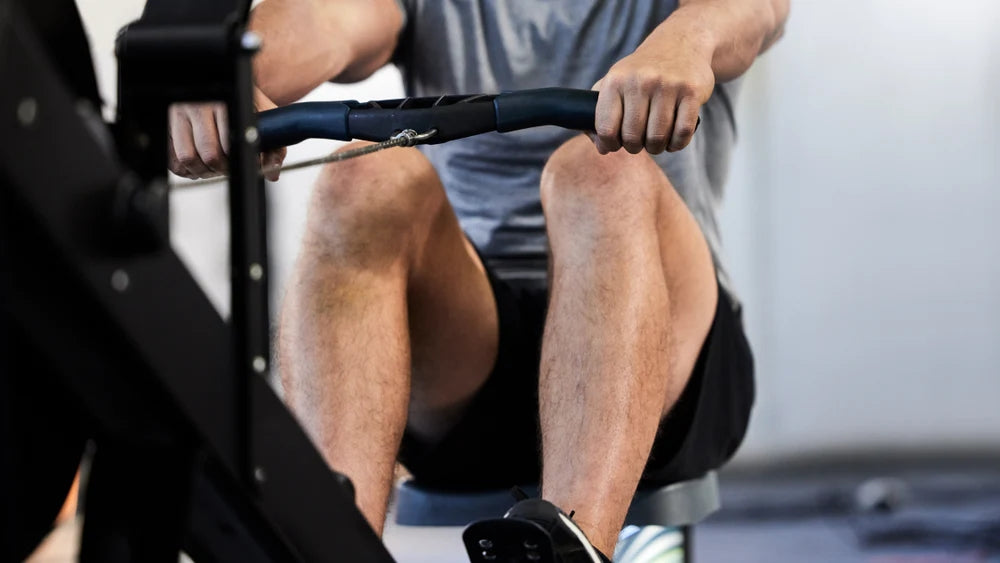
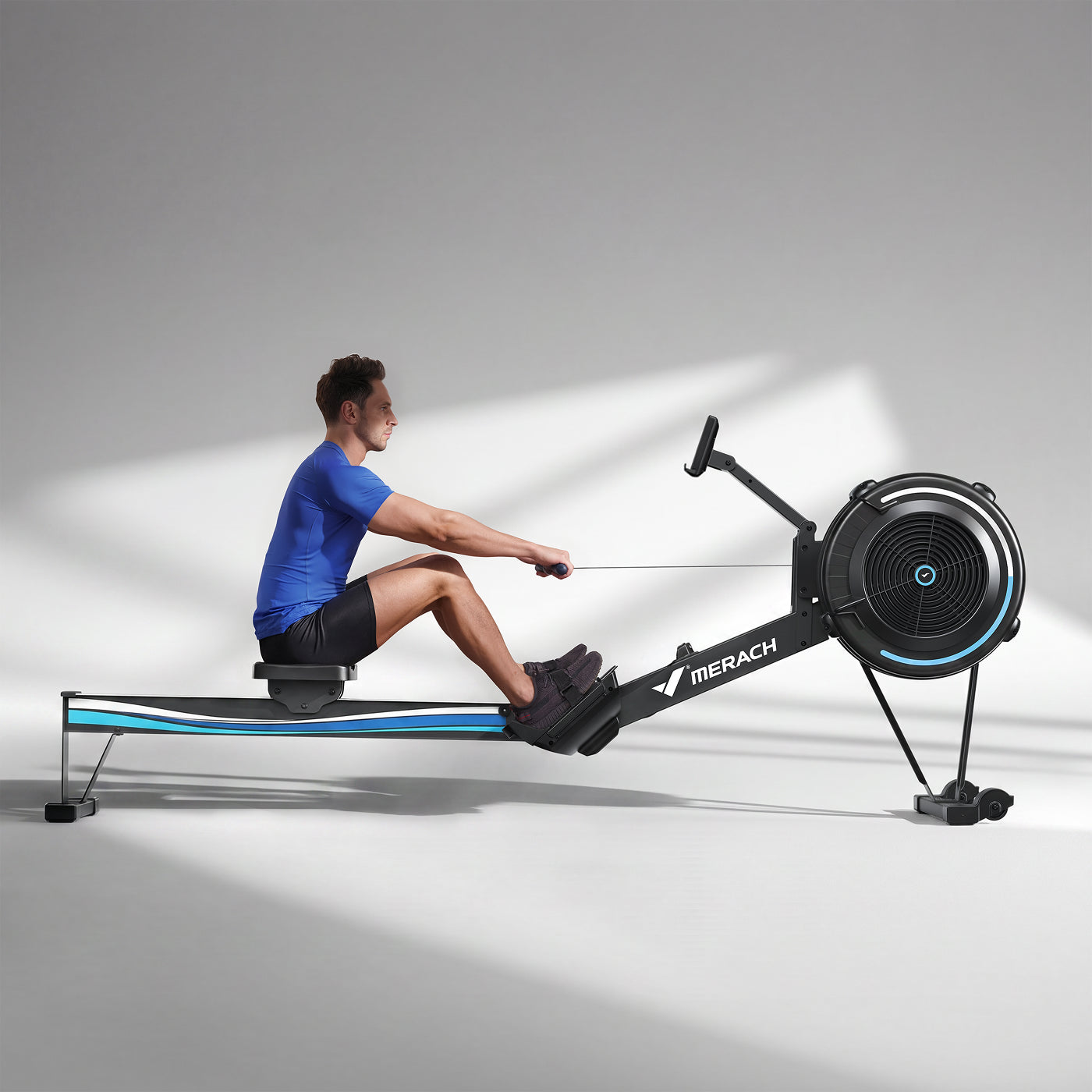
A rowing machine works almost the entire body, making it one of the most efficient cardio machines you can have at home.
Main Muscle Groups Worked
- Lower body: quadriceps, hamstrings, glutes and calves
- Core: abdominals, obliques and lower back
- Upper body: lats, shoulders, traps, biceps and forearms
How the Rowing Stroke Works
- Leg drive (around 60% of the effort): quads and glutes generate most of the power
- Body swing (around 20%): core and back muscles engage
- Arm pull (around 20%): upper-body muscles complete the movement
Why Rowing Is So Effective
Because rowing combines several muscle groups in one smooth motion, it can help improve posture, coordination and functional strength whilst also delivering an excellent cardiovascular workout.
Exercise Bike: Lower-Body Focused Training
Exercise bikes mainly target the legs, making them ideal for straightforward cardio sessions or focused lower-body training.
Main Muscle Groups Worked
- Lower body: quadriceps, hamstrings, glutes and calves
- Core: light stabilisation work
- Upper body: minimal involvement
Pedalling Mechanics
- Downstroke: quads and glutes produce the main driving force
- Upstroke: hamstrings and calves assist the movement
- Core: helps maintain posture throughout the workout
Why So Many People Choose Exercise Bikes
Cycling is easy to pick up, gentle on the joints and excellent for improving cardiovascular fitness. It’s also a popular option for rehabilitation, recovery and low-impact daily exercise.
Muscle Training Verdict
Winner: Rowing Machine
If your goal is maximum efficiency and full-body conditioning, the rowing machine has the edge. It engages far more muscle groups than an exercise bike, helping you build strength whilst burning calories at the same time.
However, if your focus is lower-body training, rehabilitation or simple, easy-to-follow cardio sessions, an exercise bike may be the better choice.
Calories Burned & Weight Loss Potential

Rowing Machine Calorie Burn
Thanks to its full-body movement, rowing can burn a significant number of calories.
Estimated Calorie Burn (70 kg / 11 stone person)
- Light intensity: 400–450 calories per hour
- Moderate intensity: 550–650 calories per hour
- High intensity: 650–800 calories per hour
The Afterburn Effect
High-intensity rowing sessions may also increase post-workout calorie burn — often referred to as the “afterburn effect” or EPOC (Excess Post-Exercise Oxygen Consumption). This means your body can continue burning additional calories even after your session has finished.
Metabolic Benefits
Rowing combines resistance training and cardio in a single movement, which may help support muscle maintenance whilst improving cardiovascular fitness and overall calorie expenditure.
You can learn more about the benefits of rowing machines in our detailed buying guide.
Exercise Bike Calorie Burn
Exercise bikes also provide an effective calorie-burning workout, though results can vary depending on the type of bike and workout intensity.
Approximate Calorie Burn (70 kg / 11 stone person)
- Light intensity: 300–400 calories per hour
- Moderate intensity: 450–550 calories per hour
- High intensity: 600–700 calories per hour
Different Types of Exercise Bikes
- Upright bikes: balanced cardio workouts with moderate calorie burn
- Spin bikes: typically higher calorie burn due to greater resistance and intensity
- Recumbent bikes: slightly lower calorie burn but more comfortable for longer sessions
Longer Workout Potential
Many people find it easier to sustain longer workouts on an exercise bike, which can help make up for the slightly lower calorie burn per minute compared with rowing.
Final Thoughts
Both rowing machines and exercise bikes are excellent choices for creating a healthier, more active lifestyle at home. The right option ultimately comes down to your fitness goals, available space, preferred training style and overall comfort.
If you want a full-body workout with strong calorie-burning potential, a rowing machine is an excellent all-round choice. If you prefer low-impact cardio with a focus on endurance and lower-body conditioning, an exercise bike may suit you better.
Whichever machine you choose, consistency is what brings results — and investing in equipment you genuinely enjoy using is often the best decision in the long run.
You can browse our full range of rowing machines and exercise bikes on our collection pages, where we regularly offer promotions and discount codes. If you’d like more help before deciding, take a look at our complete rowing machine buying guide.

Reading next